Showing posts with label gender matters. Show all posts

25 November 2009

Sloppy Data on Stupak Analysis

Phillip Levine has an Op-Ed piece in the Times today, "False Alarm on Abortion," and as Curious Girl has a play date going on, Politica and I are sitting here in the living room, talking politics and having a hot morning beverage. Politica may or may not get around to writing a letter-to-the-editor in response to Levine's use of data about the effects of the Stupak Amendment on US women's access to abortion services, and she said she'd be happy to have our conversation blogged, for anyone else who wants to get their hackles up before lunch today.

Levine's basic point is that the rhetoric about the Stupak amendment exaggerates its potential impact on abortion restriction and misses the benefits that increased access to health care would bring for many women. He slings around a lot of statistics, like:
The Stupak amendment’s effect on any individual woman’s insurance coverage for abortion depends on what kind of insurance she has now. About 12 percent of the 62 million American women of childbearing age — ages 15 to 44 — are now covered by public insurance plans like Medicaid. For them there will be no change because current law already prohibits the use of federal funds to cover abortion costs.

Likewise, the amendment would change nothing for women who now have no insurance — about 20 percent of women of childbearing age.
So the fact that 32% of American women currently have no access to a legal medical procedure means that we shouldn't protest the fact that this situation won't change in the future?

Levine continues:
The women whose abortion coverage would be at risk are those who are covered by private insurance — some 42 million women aged 15 to 44.
Note that here he switches from discussing the percentage of women on Medicaid or uninsured to the number of women with private health insurance. 42 million women with private insurance are 68 percent of the women of childbearing age in the United States. Are we to believe that since the Stupak amendment might only affect 2/3 of the women of childbearing age, it's really not as big of a problem as some critics have suggested?

Well, that's not exactly what Levine is saying, for he goes on to note that those 42 million women are more likely to be older, to have higher family incomes, and to be less likely to have abortions than uninsured women or women on Medicaid. (He doesn't cite the sources for his figures about income and abortion, and I've not tried to verify them myself; for my argument here, I'm assuming those figures are accurate, but he's sloppy enough with the data he presents that I'm skeptical.) So because of the higher family income, Levine asserts that the Stupak amendment won't pose a big problem:
Even if women with private health insurance find themselves seeking an abortion, the out-of-pocket cost for the vast majority of them is not that high relative to their income. In general, 89 percent of abortions are performed in the first trimester; these non-hospital procedures cost an average of around $400.
$400 can still be a lot of money.

Levine also says:

The small group of women who decide to abort after their first trimester — perhaps for reasons of fetal health — could potentially be affected more seriously, as these abortions are considerably more expensive. Yet the women who undergo second-trimester abortions are unlikely to be covered by private insurance now; nearly two-thirds of them have family incomes below 200 percent of the poverty level.
Again he backs into the "these women are currently in a bad position so there's no need to complain that this won't address it" argument, with the "perhaps" suggesting that women seeking later-term abortions are perhaps doing it for "real" reasons, but perhaps not. Late term abortions aren't sought lightly, and it's maddening to read commentary that suggests they are.

Levine does make a good point: that even with the Stupak Amendment in place, health care reform would bring better access to health care to millions of women, and thus provide better access to contraception. This would be good, to get contraception to women who want it. But look at the way Levine plays out this point to slam the decisions of poor women to have children at all:
[His prior research on the effects of expanded Medicaid coverage and contraception and a reduction in unintended pregnancies] suggests that health care reform could lead to a substantial reduction in unintended fertility. Consider that there are 12.4 million uninsured women of childbearing age. Suppose that health care reform ended up providing health insurance for 10 million of them. Each year, roughly 7 percent of all women this age give birth, amounting to about 700,000 births to this group of women. If their rate of fertility were cut by 9 percent, then 63,000 unintended births could be avoided if health care reform is enacted.
He has labeled every.single.one. of the births to uninsured women as "unintended," equating a reduction in births with a reduction in unintended pregnancies.

Politica's students are often surprised by the history of eugenics in the United States. The word may not be so common these days, but the prejudice against poor women having children is alive and well.

So that's what we're talking about after breakfast around here today.

29 October 2009


(This post was actually written by the fine folks at the Courage Campaign website (thanks to a post by Lesbian Dad, who saw a reminder from hekebolos at DailyKos ):

Progressives are closer than ever to a victory on health care reform. As 2009 comes to a close, we’ve moved forward on other issues. But what’s looming up ahead could be a disappointment.

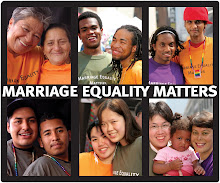
On Tuesday, November 3rd, 2009- less than a week away- there will be critical votes on on LGBT equality in three states: Washington State, Maine, and Michigan. With so much attention devoted to other issues in the political realm, bloggers have banded together to ensure we don’t forget the ones with a firm deadline next week.

For that reason, we’ve [The Courage Campaign] joined with these three campaigns to put together a summary of who, what, and how. If you haven’t heard of these campaigns, and/or haven’t done anything yet to support them, please consider helping out. If you are a blogger please feel free to grab this content whole cloth and use it for your blog posts. Scroll down to the bottom to grab the formatted HTML to drop into a post.

Last year, as Obama and Democrats were winning across the country, we lost marriage equality in California. It was a bittersweet victory. Pitch in to make sure 2009 isn’t a bittersweet year. Take action to support LGBT equality TODAY.


Washington:

Who we are: Approve Referendum 71 is the campaign to preserve domestic partnerships in Washington State. By voting to approve, voters retain the domestic partnership laws that were passed during this year's legislative session, including using sick leave to care for a partner, adoption rights, insurance rights, and more.


What we need: We need phone bankers to get our supporters out to vote. Washington is an all mail-in ballot state, and we need to ensure our supporters put their ballots in the mail. Also, youth turnout is a critical component of our campaign, and youth turnout historically drops in off-year elections. So we need a lot of help to turn them out.

How you do it: Sign up here to make remote calls for Approve 71. We'll then contact you for a training, and you can make GOTV calls.


Maine:

Who we are: The No On 1/Protect Maine Equality campaign is working to protect Maine's recently-passed law legalizing marriage equality for same-sex couples. Our opponents have put the issue on the ballot for Nov 3, 2009. Because of Maine's early voting election laws, people are already voting at the polls, so we need help immediately to turn out our side at the polls.

What we need: We need you to devote a few hours to Call for Equality. Call for Equality is a virtual phonebank set up so that you can call Maine voters wherever you are. Much of Maine is rural, where canvassing isn't effective, so we need to reach these voters- along with other supporters- by phone. All you need is a phone and internet connection. No experience required! We'll provide the training, and all you need is a a few hours to help get a win in Maine.

How you do it: Click here to sign up for a training and your shift. There are lots of times available for your convenience.

Kalamazoo, MI:

Goal Thermometer

Who We Are: The Yes on Ordinance 1856 / One Kalamazoo campaign is working in Michigan to support the City Commission of Kalamazoo's twice approved ordinance for housing, employment, and public accommodation protections for gay and transgender residents. Opponents forced a public referendum on the ordinance so dedicated local volunteers, led by former Stonewall Democrats Executive Director Jon Hoadley, are working to ensure voters say YES to fairness and equality and keep Ordinance 1856.

Why The Urgency: In the final weeks, the opposition has gone all out with aggressive disinformation and misleading red herrings to try to defeat the ordinance. This includes signs that say "No to Discrimination" (even though voting No actually supports continued discrimination of GLBT residents), transphobic door hangers and fliers, and now radio ads that falsely suggest that criminal behavior will become legal when this simply isn't true. The Yes on Ordinance 1856 supporters are better organized but many voters who want to vote for gay and transgender people are getting confused by the opposition.

How To Help:


1) Help the One Kalamazoo campaign raise a final $10,000 specifically dedicated to fight back against the lies on the local TV and radio airwaves and fully fund the campaign's final field and GOTV efforts.

Give here: http://www.actblue.com/page/3-2-1-countdown

2) If you live nearby and can physically volunteer in Kalamazoo sign up here. If you know anyone that lives in Kalamazoo, use the One Kalamazoo campaign's online canvass tool to remind those voters that they need to vote on November 3rd and vote YES on Ordinance 1856 to support equality for gay and transgender people.

Contact voters: http://www.onekalamazoo.com/tellfriends2

12 April 2009

What'll be going on at Amazon on Monday morning?

If you're on twitter, you've probably noticed the #amazonfail trend, tweets about Amazon.com's decision to strip sales ranking info from lgbt books (b/c of their "adult" content). Metafilter reports:

Within the last few hours, a trend on Twitter has emerged in response to Amazon's removing the sales ranking of books they consider to have "adult content," which also keeps those books from appearing in search results. However, while seeming to unilaterally de-list any books with gay themes and characters, many books with adult heterosexual content were left untouched.
There's a move afoot to googlebomb amazon (described here) by generating links to a new definition of amazon rank. The info in the twitter stream is providing fascinating combination of wit, snark, and info about titles which have been delisted (or not--Lady Chatterly's Lover has lost its sales rank, but Lolita hasn't). And there are a host of interesting blog analyses of the subject, all with other links in them. (Becky Howard just tweeted that google news is still unaware of this story, although metafilter is reporting it.)

I'm thinking that there will be some early morning meetings at Amazon about this. Wonder what the corporate response will be. Hard to understand what they were thinking, really.

03 June 2008

Here's Dreaming of You, George

A public service announcement in a pseudonymous sort of way: if anyone reading here attended a Fancy Pants University that leads its alumni/ae to think fondly of having the rocks of New England in their muscles and their brains, please remember to vote in the alumni organization election; it's important. Only 21% of alumni/ae have voted so far, alumnae tend to vote at lower rates than alumni, and the alumni organization's leadership has the ability to affect FPU in some very real ways. Please vote--and that link above tells you where I stand on the current controversies.

Anyway. Back to business. I've been planning a post for a while now titled Same Same, But Different, but after I read my friend Joyce's thoughts on her old male self, this other title popped into my head. Or at least it popped into my head this morning when I remembered my dream from last night, which started at the (in my dreamworld) ranch that was the boyhood home of Writer Colleague, whose sibling had recently announced she had transitioned from male to female. The rest of Writer Colleague's family wasn't quite settled on this, but Writer Colleague was determined to support his sibling, and had written a little poem about how much good he wished for his sister, and put an American flag sticker on the poem, and ended the poem with the line "And may all these good things also flow to Joyce." [Point of clarification here: I do have a real Writer Colleague who really did grow up on a ranch, but not a ranch that looks anything like the mountainous ranch in my dream; Writer Colleague doesn't write poems for publication, doesn't decorate his work with flag stickers, and to my knowledge doesn't have a transsexual sibling.] Politica, Curious Girl, and I were all at a big dinner at the ranch, and CG was charming Writer Colleague's father while the sibling and Politica talked politics.

All of a sudden George appeared, and said, "Susan! it's great that you're here. Because it's snowing, we can head out into my hometown and I can show you around." Sure enough, in the magical dream ranch, it had started snowing. George took my hand, Politica and CG followed, and we went through a curtain of snow into George's hometown. I've never actually been to George's hometown, but I'm pretty darn sure it doesn't get much snow, magic or otherwise, and it probably doesn't have a lovely little canal winding through it with bridges and big stones for Curious Girl to excitedly jump across. We all walked around George's town, with George pointed out the landmarks, me saying things like, "George! You're right--your ranch was a great place to grow up. It's out in the country, but look how quickly we came into the town for all these great stores and things to do." I looked at George's old school, the opera house, restaurants, benches, and parks. It was a great walk. When I woke up I had to smile, because this little town in my dream was just green and treed and lusciously wet in a way that the general area George grew up probably isn't (but Joyce will correct me if I'm wrong, of course).

I had a lot of dreams about George when I first learned about Joyce, and it's odd that I'm continuing to dream about all this. Usually I'm a pretty rational person who talks things out while researching and reading. I dream a lot, but this is the first time in a while I've been aware that I'm dreaming around the same kinds of issues in a short period of time. I'm not entirely sure how to interpret these dreams yet--part of the series is more a dream feeling, dreams about freedom and energy. This dream seems to be integrating my past and present, bringing together figures from today with friends from long ago, with a personal tour of George's past, too; I think I'm mixing themes from our relocation and house hunt with my thoughts on gender in the world, too.

Joyce has been writing a bit about how to integrate George with Joyce--her metaphor for what George needs now is retirement. In the first post I linked to above, Joyce wishes George a playful retirement. I guess he's doing some playing in my dreams, and that's fine by me, as being in touch with Joyce so much more frequently these past few months has made me wish I'd been in more frequent touch with George. So dreaming George is just fine by me. I hope it's fine by Joyce, too. Maybe this post is one kind of postcard Joyce is hoping to get from George from his retirement on occasion. Who knows?

***************************

I saw George in New Orleans (I'll say George, as that's what the nametag said, and that's what the male clothes suggested, even though I've been writing to Joyce, and using Joyce in talking with Politica and anyone else about Joyce-in-the-present). It was kind of anticlimactic, hence the "same same but different" title I'd planned. George looked almost giddy at times, but otherwise, it was really kind of just the same as any other conference dinner we might have had. Mary, George's wife, seemed a little more nervous, having had a little less practice telling the coming out story. But George seemed relaxed and happy, and that was just good to see. We had a great meal, a nice walk around the neighborhood, and I went home feeling happy to have seen George and Mary, looking forward to seeing Joyce and Mary.

*****************************

I'm so discomboulated this spring/summer that I can't remember whether I've blogged about the conversations I've had with Curious Girl regarding Joyce. CG hasn't met Joyce yet (nor George either), and while she's heard me and Politica talking about George/Joyce, I don't think she's really been tracking the conversations. A few months ago, though, we were driving around and CG announced that she was hungry. "My tummy is hungry. He says we need some food." She paused. "No, she says. My tummy is a girl." (she's often quite put out when her violin teacher refers to some of her fingers as "he," as in "tell your thumb he better move up here....") I laughed. "Do you think my tummy is a girl, too?" Yes, I learned. "Do you think all girls have girl tummies and boys have boy tummies?" CG said yes. I realized this was a great opening, and explained that I had a friend who was a boy on the outside but who always knew that he was a girl on the inside, that he had a girl tummy and was just a girl inside, and so now he was going to be a girl on the outside too. CG took this in, and asked how. Medicines and some doctors were helping him. "Will she still sound like his regular self?" was CG's big question.

This conversation has stayed with her, I've learned, in two ways. We talk a lot about what our new neighborhood in Germany is going to be like, and what CG's friends will be like there. We want to move to a neighborhood with kids, she knows. "I think there will be kids who live near us," CG pointed out recently. "Will there be girls?" Politica and I didn't know, of course, and we said we'd just have to see. "That's right," said Curious Girl. "They might be girls, or they might be boys, or they might be girls on the outside and boys on the inside, or boys on the outside and girls on the inside. We'll just have to see." Politica did point out that most people are kind of the same inside and out, but we all agreed, we'd just have to see.

Still more recently, CG said, "I hope Historian Friend's New Baby Boy is a girl when he grows up." I did some combination of "hmm. we'll see. isn't Baby great?" and CG said, "yes, and then he can go to the doctor and the doctor would cut him open and there'd be a girl inside. Yay!" So I leave you with the matroishka doll theory of gender identity, one which will doubtless get greater attention here in the Granola household in the future.

***************************

I created the category gender matters when I first wrote about Joyce. Gender does matter, but one way it has mattered to me since I've been writing and talking to/about Joyce is that gender makes connections. I feel closer to Joyce now that George isn't keeping secrets. I introduced myself to Joyce's best friend in Bedford Falls at our conference in New Orleans, something I'd likely have been too shy to do had it not been for the gender matters Joyce has raised. Her best friend introduced me to his wife, too, and we all had a great conversation in the book exhibit.

I've been far away from Joyce during most of the overt struggle with her gender, so I've never had to stand by and watch George struggling with depression, fear, and the other truly difficult aspects of living with gender identity disorder. I hope my distance from those darker times, and my delight in a friendship so reinvigorated since this announcement, doesn't lead me to underestimate past difficulties here. But I just feel such delight at connections (re)established. It's rare that anyone has the chance to make a new friend building on such a long acquaintance with an old friend. To borrow a phrase from CG, Joyce is special to me, even though I've yet to see her in person (a feeling that's not strange to write out here in blogland, where we are used to making connections with people we don't (yet or ever) know in person). I wondered whether I'd miss George once Joyce fully emerged--and I don't, exactly, as George seems to pop up not just in memory but in dreams. I can't remember, really, whether Joyce was in my dream, too, but I have a feeling she was somehow there, too, hanging out with Writer Colleague's sibling.

So I'm dreaming, and thinking, and talking about gender. Nice to think about gender in ways that don't involve princesses, I must say. It would be nice to think about gender in ways that lead to a nice bloggy conclusion, but a conclusion doesn't seem to be emerging. That's OK for tonight, I think, so I'll just leave it here. More thoughts to follow, I'm sure.

01 May 2008

I'm not used to this

I'm finally getting to vote in a presidential primary with an actual contest going on. I just got a phone call from a gravelly-voiced someone alleging to be from the state's Election Board wanting to know if I had decided who I was going to vote for for President. Shouldn't the Election Board know that I"m not voting for president in the upcoming election? I'm voting for the nominee for president. Not the same thing.

A few days ago, I got a phone poll call, from an outsourced commercial polling outfit I'd never heard of. I couldn't decide who was sponsoring the poll; it was full of questions about whether I was more worried about losing civil liberties or terrorist attacks (the former, for the record) and whether I was worried about a decline in morality and relations between church and state. One question asked if any members of my family are gay or lesbian. The poll clearly didn't envision a lesbian respondent.

The AP poll got me, too. I love polls, which amuses Politica.

A local poll, focused on our Congressional primary, had a pollster who had been trained on all the candidates' names, but otherwise was reading very haltingly (as was the outsourced pollster asking the church/state questions earlier). I'm not impressed by people who can't read the forms properly. I wonder what that does to poll results, actually.

Earlier today, a volunteer from Hillary's campaign called me to find out if they could count on my vote. I'm leaning that way, I said, but still not quite sure. "I know people say it would be great to have an African-American president," the volunteer replied, "but wouldn't it be great to have the first woman president in our lifetime?" This is the sort of thing that makes me think I liked Hillary for president better before she started campaigning. I was going to just get off the phone and get back to work, but I thought, no, I should say something. I pointed out that it wasn't necessary to play a desire to have an African-American president against having a woman president: the categories aren't exclusive (in the abstract), and I don't want to cast my vote in the primary on either gender or race. Why not have volunteers say something substantive about what Hillary would do as president? The reason I'm leaning towards her is her health care plan. But her volunteer call has got me feeling crabby about her campaign. That's no way to educate likely voters, and it simply promotes an oversimplified and unhelpful view of both race and gender. Vote for me because I'm a woman? That doesn't get too far with me.

That said, we may try keeping CG up late to see Hillary at a rally here on Saturday. She'd be thrilled, and even has a little Hillary shirt to wear to it.

24 March 2008

My New Old Friend

I've been e-mailing with a friend who told me he's been doing something very, very different. What's up, I wondered: it turns out, my friend has had gender identity disorder since very early childhood. George, it turns out, is Joyce.

My immediate reaction was to smile (albeit with a bit of a dropped jaw: I'm sure Joyce is enjoying the list of things her friends imagined might be the new and different thing she has been making arrangements to talk about). I quickly dashed off an e-mail to say something like this: I know I speak for Politica too; we love you; we support you--and your wife; we are your friends, and we are part of your support network.

My second reaction was to laugh. George was, is, the kind of person who's done everything. Grew up on a ranch, can ride a horse. Has lived abroad, is multilingual. Helped found a business, has disparate graduate degrees, isn't afraid to stake out controversial positions while listening well to others. George is (forgive the mixing of names, genders, and tenses: I'm mixing time and space here) gentle and forcefully quiet, so these experiences don't come out one after the other as any kind of bragging. It's just that in virtually any conversation, it seemed to turn out that George had relevant expertise. He knows the stars (that ranching big sky background, I guess). He's lived here, and there. He's parachuted. And what does the man who does everything do? Become a woman. That struck me as funny, just as the fact that George owned his own parachute did the night I found that out.

**********************
Joyce is an academic--smart, eloquent, rational. Her e-mail to me, while personalized, is one that I imagine she's sent to many friends and family members over the past few months. She gave me some reading tips (including Jennifer Finney Boylan's utterly compelling, you really-should-run-out-and-get-it, memoir of her MTF transition in her 40's, She's Not There), and mentioned that she has a blog, something she's been using to chronicle her thinking over the past year and a half, a period which opened in deep depression and has slowly moved through her decision to transition, heartbreakingly beautiful meditations on any number of aspects of the transition, and more recently, chronicles of telling family members, thoughts on conversations with friends and family, all mixed with snippets from the past. I skimmed through the blog in its entirety, and have been reading it more slowly and carefully, learning more about my friend, rethinking our past, imagining our future.

I want to be clear--for Joyce, and anyone else-- my immediate reaction to this news hasn't changed one bit. I loved my friend George; I love my friend Joyce. I feel closer to Joyce, in part because it's now clear a big wall has tumbled down , in part because I've been reading her blog, which contains some intensely intimate entries (albeit public intimacy, staged by a masterful rhetorician). At one point in her blog, Joyce hopes that her friends are writing through their reactions to her news. So this entry is one such point for me.

**********************
Cartoonist Scott McCloud has some work titled "I Can't Stop Thinking!" In some respects, I can't stop thinking about Joyce and her wife Mary Jo. I have other trans friends, but none that I've known in the midst of transition. I just can't stop thinking about Joyce. In the couple of weeks I've been thinking about this news, I've had vivid dreams, one about George being a gay Olympic swimmer who was transitioning to being a woman, and in the dream it turned out that his partner (also an Olympic swimmer) was also a man transitioning to be a woman. How convenient! I've also had several nights of dreams involving wild animals running free, like on an African savannah. No plot, just lots of movement and energy and freedom and elation. Somehow, it seems connected to the news about Joyce, and it feels good.

**********************
One of my favorite memories of all time involves George, Mary Jo, and their children. We all went camping one year, to a big festival, and it was so very hot one day that we left the festival and went to a state park nearby. We lazed around in the river, we lazed on a picnic blanket, singing songs, telling stories, laughing at the wonderful young boy that was George and Mary Jo's oldest son. That afternoon was perfect in the way that only a lazy summer day can be: a big blue sky, warm temperatures, warm water, good company, and only the rhythms of pleasure to guide us. We wrote about this day in our holiday letter (back in the days when we sent holiday letters in December. This year, look for more of a Fourth of July holiday letter. We're working on it, really.)

Now I'm thinking: did that day really happen? Having read Joyce's blog, I'm seeing the past through another lens, a lens of struggle with gender identity disorder that grew worse over time. We've not yet seen each other to have a longer conversation about this, and I wonder whether that afternoon sticks in their minds, too, with the clarity and perfection it does in mind. But how perfect could it have been if George, relaxing in an inner tube, was struggling with desires and secrets and selves he thought couldn't be revealed?

**********************
A few years ago, I met George in the hallways of our national professional association conference. Politica was in the midst of a pretty bad set of flare-ups associated with some of the chronic medical problems she has. "That's not fair," he said to me. "That's just not fair. Not fair at all." I was touched by the sweet vehemence of the phrasing. Now, I think back, and just as firmly say, "that's not fair" about the painful choices George had to make, moving through the world as a man. And I wonder, too, whether in that moment, George was aware of that pain, projecting some of it into his comment about Politica?

On Joyce's blog, she mentions being--as George-- at another conference and having a terrible time, sure that her colleagues would not be happy with the news that she's transsexual. I remember seeing George at a public event, and in my memory now, George was standing a bit apart from the crowd, looking sad. Is that real, or am I projecting sadness and separation into the past because of the blog posts I've now read, because of the memoirs I've now read? As I read the blog post about this moment, I thought "but you could have told me! I'd have hugged you." As I did hug George at the time.

I don't know how to trust my emotional memories of the past, now that I realize how much more was going on than I knew. But what I did know, was real, and the foundation of a good friendship.

**********************
I should, logistics willing, be seeing Joyce and Mary Jo sometime next month. I'm looking forward to it--I've always treasured the spontaneous meals we've managed to arrange at conferences, but this time, I'm hoping we'll be able to plan a time to be together and talk. Joyce may be looking forward to talking about anything but all this, though. I remember a point after Curious Girl came home, after her surgery, after her medical conditions seemed to be more stable. I realized I could answer the question "How are you?" without explaining her condition in great detail, or talking about adoption. It was rather liberating. I talk about feeding issues and adoption regularly, of course, but it was good to know that I had other narratives available to me. I wonder whether Joyce feels the same way: gender identity is a compelling narrative, but perhaps she wants to tell other stories.

**********************
We found a Shona sculpture in an art gallery, and bought it for Joyce and Mary Jo. The sculpture symbolizes spiritual evolution through physical transformation, and the contrast of polished curves and textured ridges seems like a tangible and beautiful reminder of friends afar. (You can see similar sculptures online, although this isn't where we bought it and I don't know the site.)

**********************
I'm still e-mailing Joyce on George's computer account.

Sometimes, I just stop and look at her name, and it seems to pop off the screen and rotate. Who are you, Joyce? I turn the name over and around, learning my way around its shape on the screen or page. Joyce isn't--alphabetically, materially--the same shape as George. Curious Girl would say, "I'm still getting used to it." (Note to self: as this is getting long, I'm going to write about my conversation with Curious Girl about all this separately.)

**********************
I'm realizing what mundane things I didn't know about George. Like clothes, and where they come from. George was, is, a pretty spiffy dresser at work: classic clothes, not flashy, good quality, nice looking. At home, nice quality clothes, practical clothes that would change depending on the activity. On the blog, Joyce wonders about where to shop for her new look. Me, I hate to shop, but I understand the questions about the new look (questions I have, in fact, about our upcoming move. Do professors at German University dress differently than professors here?) Joyce wonders whether a shirt from This Store, a skirt from That Store might be suitable. I never think about clothes like this. I bet Joyce dresses better than I do (she certainly knows more about makeup than I do!). It's interesting, discovering ways in which my friend is thinking about clothes. I'd never have thought to think that way.

As I said in one of my e-mails, it's a good friendship that is still unfolding all these years later (even if shopping for clothes isn't the most profound example. But there's something about the material intimacy of it all that fascinates me).


**********************
Some days, I wish I had a chance to say goodbye to George. But then, what would I say? And isn't George in Joyce?

George had a wonderful voice. I used to love being at his house when his mother would call, just to hear him say, "Hello, Mama," with wonderful elongated syllables in Hello and a lilting southern accent on the phrase. Of course, Mama passed away a few years ago, so I'd never have heard that again anyway.

I do wonder what Joyce sounds like.


**********************
It's not so simple as George vanishing and Joyce appearing. Gender is innate, but gender is performed, enacted, learned. Politica reminds me that George was really one of her few good straight male friends--but it turns out, he's more queer than straight. So it's not so simple. George, transitioning to Joyce, is making choices about intonation, fashion, gesture, voice...so many things. There are many narratives intersecting here: the creation of a trans identity, the creation of a female identiy, the refashioning of an academic identity, perhaps creation of an activist identity. Not to mention the recreation of a family identity, and the reshaping of friendships. So losing George isn't the only story, if it is a story at all.

As anyone who's been reading here for a while knows, I think a lot about adoption as something that happens at a moment in time, and something that unfolds over time in terms of identity and relationships. I've found myself wondering how much similarity there is between the kind of thinking I've done on adoption and the kind of work Joyce is doing now. Stories about making peace with the past, stories about making a coherent narrative of fragmented parts of the past...obviously there are many, many differences between these two situations, but the kind of emotional flexibility that adoption has promoted seems useful as I think about Joyce. Facts can be interpreted on multiple levels, interpretations can change over time, and sometimes contradictions just have to be lived with. George is(n't) Joyce; there are losses and gains, continuities and disjunctions.


**********************
I'm sorry Joyce struggled with such sadness at various points in her life. Reading the blog, I can't be anything but inspired as I look at the evolution she's gone through, and so pleased at the community around her--some of which I share with her as academics working in related fields, some of which I share from a period of shared geography, some of which I can see online.

I have a new, old friend: I like it.