Showing posts with label books fall open. Show all posts

12 June 2010

Goodwill

Curious Girl is reading Warriors: Into the Wild, the first book in a series set in a kitty universe where clans of cats negotiate territory, myths and history, and build social alliances. As a series, it seems not so bad, although my favorite part about the book is that CG is drawn to it, although it's a little over her head for an independent read. (She's a fluent reader, but she doesn't like reading books with dense text. I use a bookmark to block off the lines below the one we're reading if she's reading along with me, but she doesn't have the stamina to read the book independently.) So I've been reading it to her at bedtime. She closes her eyes, and tells me that she's imagining the pictures she wishes were in the book. And amazingly, sweetly, wonderfully, she relaxes herself, and she nods off as I read.

I remember an assessment CG took around 18 months at the developmental pediatrician's. One of the questions on the parent part of the assessment was whether she relaxed into a parent when a bedtime book came out. Relaxed into a parent? Not so much. Reading has always been an aerobic experience for her. There was the year, for instance, when The Snowy Day was in regular reading rotation, no matter what the season or temperature, and CG would jump out of bed and act out the story as I read. She likes talking to her stuffed animals about what she reads. She likes putting her hand on the pages and feeling the book as she reads. She likes petting the cat as she reads. Relaxing? Not so much. That comes later, with the songs and the snuggles.

Except for this past week, as we've started this book. She does remember the plot--she can talk about the universe of the book and she seems to remember the plot about as well as she does the plot of anything we've read before. But something about this book and our reading routines lets her drift herself into sleep.

Towards the beginning of the book, there's a report of a battle with another clan, and the beloved Thunder Clan deputy is killed. His body is brought back to the clan, and CG was full of questions about how the cats would react. What would they do? Could the dead cat hear them? Would there be a coffin? Would they bury him? We talked about what might happen--but then, as the book is silent on some parts of the evening in question, there was still room for speculation. "They'll put his name on a stone with his dates," she said. I didn't think so, I said, as the cats don't seem to ever use stones in this book. "But humans do," CG said. "Humans do, with the stones of goodwill."

Stones of goodwill. What a phrase. CG has experienced loss, but hasn't had much contact with cemeteries. I didn't even know she knew the word goodwill, and I don't know where she gets her cemetery notions from. But I love the idea of stones of goodwill, stones beaming goodwill into the world for people who are mourning.

I've read Katie Granju's blog, Mamapundit, on and off for a while. The past few months she has been very honestly writing about the death of her 18 year old son Henry, his drug addiction, and the assault and overdose that precipitated the medical crisis that killed him. Today, I mailed off a donation to the memorial scholarship the family has established to help families pay for the costs of addiction treatment for their children.

Two of my college friends have lost teenaged children in the past year. I didn't know either child, but their names and the stories I've heard haunt me, as does Henry. As I walked downtown today, I looked around at what some of the older teens or young adults were doing, and thoughts flitted through my head--that child will never get to do that. My friend will never get to see her kid climbing a rock again. Katie Granju will never be walking through a bookstore to redeem a gift certificate with Henry. It's so sad.

But as I saw the rocks downtown (yes, our downtown has rocks. Doesn't yours?), CG's stones of goodwill came to mind, too. Katie Granju's grief is raw, and I don't know what, besides time, will soften its edges as she incorporates her unimaginable loss into everyday life. But if the stones of the earth could radiate goodwill for the mourners, what kind of world would we have?

16 December 2009

Good Reads

The friendly folks at Henry Holt sent me a review copy of Rhoda Janzen's Mennonite in a Little Black Dress. I received the book free, but no other compensation.

Laura at 11D says that Mennonite in a Little Black Dress is an impressive book because it appears to start off as a chick lit memoir about the search for Mr. Right, but turns out to be an ode to a daughter's coming home to the Right Family. If you're not usually into books with photos of high-heeled shoes on the cover, think again about this one: it's much less a story about a woman and her wardrobe than the story of a woman and her childhood and a woman and her parents. Rhoda Janzen, whose sudden divorce and subsequent car accident leads her to head half way across the country to spend several months living at home with her (Mennonite) parents, tells a story about going home and growin up.

At times, she's laugh-out-loud funny (anecdotes about traveling with her siblings on family vacations, going out shopping with a pee bag taped to her leg, and arguing with her mother about whether it's better to date a preacher or a pothead made this a bad choice for a book to read while a child was trying to fall asleep on top of me). At other times, she's serious and tender (an anecdote about her first Thanksgiving away from home, when she and her sister raise their voices in traditional Mennonite song before eating, is just lovely). Some times, as Laura notes, she's elusive: she's an academic, but I didn't always recognize my academic life in hers. She seems to have a bit more money than many academics I know in English departments.

Janzen is a poet, and this is her first turn toward memoir. I thought the book could have been edited more tightly--I'm trying to put my finger on just what it is about it that made me connect with her up front. I want to like Janzen more. We should have a lot in common--as Laura points out, growing up Mennonite Brethren is not that different from growing up in a conservative Catholic community, and I, too, had arguments with my parents about unstylish clothing that they valued for its modesty. But somehow, I wanted something a little bit more from Janzen's memoir....but as I try to describe what that is, I can't. I wanted to know a bit more about the marraige whose failure opens the memoir (it turns out later that she and her ex husband actually divorced twice, but there's nothing in the text to help us understand what drew her to him so repeatedly). I wanted to know a bit more about her academic experiences as she juggled the personal turmoil. There are more stories there, for sure.

But what is there is pretty interesting. So if you're looking for a memoir this season, consider this.

25 October 2009

Love Ya Bunches and Scholastic Book Fairs Near You

Yesterday on Facebook I started seeing friends link to this petition asking Scholastic to stop censoring gay-friendly books. (Scholastic, for folks not in the US or not parenting kids in school, is a a publisher/distribution company that promotes children's books via book fairs at schools and catalogs; when parents purchase books through the catalogs, classroom teachers earn credits that they can spend on more books for their classroom library.) This petition has arisen because of a controversy about Lauren Myracle’s new book Luv Ya Bunches. Luv Ya Bunches, the first in a planned four-book series, is about the friendships that form among a group of girls with nothing, apparently, in common besides the fact that they're all named after flowers. But over the course of a new school year, their social circles collide and friendships form. And one of the girls has two moms.

Scholastic asked Myralce to change the character's family structure to a one mom, one dad family so that they could feature Luv Ya Bunches at book fairs. Myracle did make some other small changes to the book in response to Scholastic's concerns, but she refused to change the character's family. So Scholastic--while it is offering the book in its catalog--will not offer Luv Ya Bunches at book fairs. For a fuller version of the story, see a fine School Library Journal piece on it, and for a cool video of Myracle talking about the book, see Dana's post at Mombian.

Scholastic says it’s not censorship because there are lots of books they don’t offer at book fairs; they pick and choose based on many factors--they run a business, after all, and it seems sadly reasonable that from a business perspective, they want to avoid potential controversy. But then, from a social change perspective, why are we assuming that the very fact of two-mom families is likely to cause controversy?

So, what to do? I heard a bit from a librarian friend today and she offers a few practical suggestions. We can sign the online petition to Scholastic, of course, but I'm a little skeptical that online petitions do a lot to actually change anyone's mind (Politica, who studies such things, tells me that the political science literature suggests that politicians respond more to contacts that are clearly individualized, like hand-written letters, and less to things that are easy to click on and clearly organized by someone else).

But more importantly, we can work with our local book fairs to make the book available. Turns out that the people who organize book fairs can request that particular titles be shipped. So if your school has Scholastic book fairs, contact the librarian or parent who organizes the book fairs and ask them to order Luv Ya Bunches for the book fair.

Why is this important? Book fairs are chances for children to browse book displays and decide, on their own, what books they're interested in. Book displays offer a chance for students to look at books and think "Hey! I'd like to read that." And they offer a chance for students to look at many different books--and perhaps see themselves in a book, perhaps see someone very different from themselves in a book. If Luv Ya Bunches or other books with characters with gay/lesbian parents aren't available at book fairs, then children won't have the chance to make their own choices about reading about families like mine. And if Scholastic successfully keeps books like Luv Ya Bunches out of book fairs, it's contributing to a world view that says two-mom families, or two-dad families, are controversial in and of themselves, or distasteful on face.


So: when you attend your school's book fair (usually there's a parent afternoon or night), ask for Luv Ya Bunches. Before the fair, ask the librarian or book fair coordinator to ask the Scholastic book fair rep to include Luv Ya Bunches in the books that get shipped for your fair. Ask your friends to do the same.

And of course, if you see the book at a book fair: buy it. Buy two, and gift one to a friend.

I've not been impressed by the Scholastic book catalogs that Curious Girl has been bringing home for the past few years. For every bundle of Caldecott award winners or Jan Brett or Judy Schachner book they offer, they seem to have 20 books based on commerical tie ins, or bundled with cheap plastic crap. But Curious Girl loves looking through the Scholastic catalogs the same way I remember loving them when I was a kid (and were they so filled with crap 40 years ago? perhaps my mother felt the same way...). And CG loves the book fairs (even if her book preferences seem to be driven by what covers sparkle or have necklaces attached or have something to do with High School Musical). Books on display can be thrilling. So do your part to get Luv Ya Bunches to a book fair near you. Students at your school probably already know kids with gay or lesbian parents--it doesn't take books to inform children about the social reality that surrounds them. So let's help Scholastic figure out that a book like Luv Ya Bunches makes kids and parents happy, not mad.

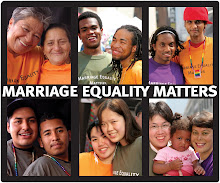
And if you've still got a little energy for doing good for gay rights: help the folks in Maine with the No On One effort (voting No one One will allow the marriage equality law to go into effect) or help folks in Washington State protect domestic partner benefits (by approving Ref. 71).

11 June 2009

More Summer Reading: It's a Sequel!

First, an update: when I finished reading Tedd Arnold's Magdalena Catalina Hoopensteiner Wallendiner Hogan Logan Bogan Was Her Name in Curious Girl's kindergarten class yesterday, they said, "We have to do something for you," and Fabulous Teacher sent CG over to pick up the Very! Special! Project! they had made for me: a Thank You Susan book, for which every child had written a sentence and drawn a picture. "You're a good friend," wrote one boy, and "I love you," said another child (who then came up to me and said, "I love you because you're like a mother to me.") I got hugs, and many of them wanted to explain their drawings to me. They also gave me a gift card to Big Bookstore, but it's the Thank You book that I'll be treasuring for a while. Reading to kindergarteners is a great gig.

Today is the last day of school, a little half-day (during which CG's kindergarten class is going to lead the school in singing the German State Song, something she's very proud of). She'll have a mix of summer camps and family time this summer, and I'm feeling alternately stressed and relaxed about the rest of the summer (note to the world: we professors do not "have the summer off," and even if my professorial side did, my administrative work continues apace. May and June are crunch time in my office, and next year I'll be better prepared for that). All of which is to say that a book like The Double-Daring Book for Girls is just my speed at the moment. The sequel to The Daring Book for Girls (which I reviewed for Mother Talk) is similarly formatted--lots of short activities/information for girls, on everything from stargazing to how to make a scarecrow, how to throw and catch a football, how to whittle. Mel invited the Mother Talk bloggers to participate in a virtual book shower for the sequel, and invited us all to double dare our readers about something in the book. She challenged her Brownie troop to see who could tie a sarong the fastest.

I looked through the book for activities I'd want to do. There are plenty (stargaze, make a lava lamp, do lanyards (which I learned are called scoubidou by some people), calligraphy. But I'm really drawn to the more encylopedic sections of the book. I love the list of collective nouns* for animals (a rhumba of rattlesnakes! a business of ferrets! an unkindness, or a conspiracy, of ravens!); I love the list of moons (January's Wolf Moon, July's Buck Moon or Thunder Moon). The randomness of these sorts of entries makes the world seem so captivating, and I love just flipping pages.

There's a section on slumber party games that includes "This is a What?" I know that game as "This is a Spoon," and I think of it as a rainy day game--I learned it as a thing to do on a rainy summer afternoon at a cottage on Georgian Bay. Sit around a table, or in a circle, and the leader holds up a spoon, passes it to the right, with the following dialogue:
  • Giver: This is a spoon.
  • Receiver: A what?
  • Giver: A spoon.
  • Receiver: A what?
  • Giver: A spoon
  • Receiver: Oh, a spoon!
Then the receiver turns to their right, and starts the dialogue again.

Seems pretty simple and not too interesting, yes? Well, the leader gets one object going, and then starts another object moving around in the other direction (or you can have two people start simultaneously). pretty soon people will be playing roles of both giver and receiver, flipping heads around to keep the dialogue going. It's very, very funny. Give it a try.

So what's your favorite rainy day game?


*The OED says that an unkindness of ravens is obsolete (last citation was 1486); it doesn't list the rattlesnake sense of rhumba.

02 June 2009

Kindergarten Reading Roundup

I'm here, blogging in my head more than on the screen. Some book posts are pushing their way out, though!

I've been reading every Wednesday, just before the end of the school day. Here are most of the selections, not in good order:
  • Wemberly Worried, by Kevin Henkes. A great story of a little mouse who's veeeerry worried about the start of the school year.
  • Tree-ring circus, by Adam Rex. What happens when circus animals escape? Read this joyously illustrated book and find out!
  • Ookpik : the travels of a snowy owl by Bruce Hiscock. Curious Girl's class uses a phonics-exploration program that has a snowy owl puppet (Echo the Owl) as a prop to lead the kids in their letter/sound correspondence chants. CG loves Echo, and this book about the journey of a snowy owl who heads south to look for food was a big hit with the class. Full of great facts about owls, and with great, big picture spreads.
  • Chester's Way, by Kevin Henkes. I heart Kevin Henkes. Both Wemberly and Chester's Way have lots of little side dialogues in the illustrations, and they just hit on the adventurousness and intensity of kid-friendships and explorations. This book is about the challenges facing Chester and Wilson when Lily moves into the neighborhood (yes, Lily, as in the marvelous Lily's Purple Plastic Purse).
  • The Family Book, by Todd Parr. Like all of Parr's work, this raucously colored book celebrates diversity--this time diversity of families (some of whom look like each other and some of whom look like their pets, for example).
  • Abe Lincoln Crosses a Creek, by Deborah Hopkinson and John Hendrix. This fictional tale of Abe Lincoln describes an outing he might have had with a boyhood friend on an afternoon's play by a raging river. Hendrix' illustrations are so vivid, and the text plays with the illustrations, talking to the illustrator as though he's drawing the pictures while we read. The kids loved the idea of a president as a kid.
  • John Coltrane's Giant Steps, by Chris Raschka. We love Raschka's illustrations and words--Charlie Parker Played Bebop is another family favorite, and this book about John Coltrane uses words and pictures to give the feeling of Coltrane's classic Giant Steps.
  • Silly Lilly and the Four Seasons, by Agnes Rosenstiehl (translated from the French). This cartoon-paneled book is just plain fun. I brought in Alison Bechdel's Fun Home just to hold up to show the kids that even grownups read paneled-books too.
  • 365 Penguins, by Jena-Luc Fromental and Joelle Jolivet (also translated from the French by an uncredited translator). This delightful oversized book tells the story of a family who get, mysteriously by mail a penguin a day, and go through amusing bouts of trying to house and feed them. Lots of math fun is mixed in with the story, and the illustrations rock.
  • Leo Loves Round, by Eli Goldblatt and Wendy Osterweil, an out-of-print book by my friends Eli and Wendy, whose son Leo has now graduated from college. But this book about all the round things Leo loved as a boy is just a delight: Leo loves round. He loves balls that bounce, roll, float, and fly..... If it's in your library or at a used book store, pick it up.
  • Borya and the Burps, by Joan McNamara, a Russian adoption story that looks at the disorientation a baby might face and the little things that help families connect
  • Through Moon and Star and Night Skies, by Ann Turner and James Hale, an adoption story about an international adoption
  • Sammy Spider's First Rosh Hashanah and Sammy Spider's First Hanukkah, by Sylvia Rouss. The Sammy Spider series is a lovely, colorful way to introduce kids to Jewish holidays, and the singsong repetition of "Silly Sammy! Spiders don't [insert holiday action here], spiders spin webs!" always makes for good group participation.
  • Martin's Big Words: The Life of Martin Luther King, Jr., by Doreen Rappaport and Bryan Collier. Interesting comments in the reviews at Amazon, which focus on objections by some readers that there aren't any women or white people in the illustrations. (I think it's a good thing for white kids to read books without white kids in the illustrations, some of the time--for starters, that's a mirror of the experience that children of color have quite frequently in picture books, and it's a good thing to upset that white reading privilege. Lack of women might be more problematic, but I'm not reading this book as a big history of the whole civil rights movement, but rather a way into a good biography, with an emphasis on MLK's language.) The illustrations are gorgeous.
  • Ann and Liv Cross Antarctica, by Zoe Alderfer Ryan and Nicholas Reti, a story of the first women (Ann Bancroft and Liv Arnesen) to reach the South Pole, packaged with a lot of kid-inspiring messages about the importance of following one's dreams.
  • A River of Words, by Jen Bryant and Melissa Sweet, a biography of William Carlos Williams, with fantabulous collage artwork and a great presentation of a young boy who loved words who grew up to be a doctor and poet. This is a book that will work for kids of wide age ranges, as a fair bit of poetry is built into the illustrations and endpapers. Most of that poetry was over the heads for kindergarten so I didn't read it all--they were more interested in the biography. After we read this, we wrote an imitation of his "This is Just to Say," as the kids came up with ideas for a couple of places in the poem where I'd left blanks for them to fill.
  • Munschworks: The First Munsch Collection, by Robert Munsch. This volume contains The Paper Bag Princess, The Fire Station, I Have to Go!, David's Father, and Thomas' Snowsuit. I forget which of these books I read first, but the class loved it so much that they asked for another, and we ended up reading all five books over two or three weeks. Munsch is very funny, and Martchenko's illustrations add great visual interest for a readaloud. If you have the chance to listen to Munsch read his own work (which you can do on the author link above), you'll appreciate the humor even more. He reads very well.
  • Skippyjon Jones, by Judy Schachner. If you've never read a Skippyjon Jones book, run to the nearest library and borrow one. Skippyjon Jones is a hysterically funny Siamese cat who has a rich fantasy life in which he is a chiuaua who runs with a gang of friends, beating bad guys. The mix of Spanish and English, and the rhythmic punning, is awesome. This book just begs to be read aloud. CG's teacher had never read any Skippyjon Jones, so I was happy to introduce her to him.
  • How the Ladies Stopped the Wind, by Bruce McMillan and Gunnella. I didn't like this one quite as well as McMillan and Gunnella's first book, The Problem with Chickens, but that's only a slight problem. Do they really sing to animals in Iceland? Learning more about Icelandic folklore is on my summer reading to-do list. In the meantime, check out this fun book about resourceful ladies who know how to solve a problem.
  • Where the Sidewalk Ends, by Shel Silverstein. CG loves "Sick" and the one about the dentist and the crocodile, and so many kids in the room had already read some Silverstein that the connections they made to the poems were lots of fun.
I'm sure I'm forgetting a few (I think we read some Mo Willems, and one of the Leonardo the Terrible Monster and one of the Knuffle Bunny books), but this gives you a sense of what I've been doing on Wednesdays at 2:00 this year. Only two more Wednesdays left: tomorrow, it's Peggy Rothmann's The Day the Babies Crawled Away, which has got to be one of the most beautiful picture books ever. I'm still debating about the last book of the year. Maybe something silly like Catalina Magdalina Hoopensteiner Wallendiner, or perhaps something new. I'll give each kid a bookplate from My Home Library. Today, at the parent volunteer breakfast, each volunteer got some bulbs or a plant from a local nursery. I was happy to get the plant (strawberries!), but truly, reading each week has been as much fun for me as for the kids. Kindergarteners are such an enthusiastic audience. I love watching them get so excited when they have connections to the books (which can be rather random, as in "my mom has the same first name as the illustrator!") and when they want to tell me about what they're reading, or about what they know about the books already. They're so happy in school. I hope that feeling lasts into grade one.

About half of the books I've read this year are ones I read sometime last year in my weekly reading gig; it's been great to see how a year makes a difference in the way kids listen to and interact with a book. I'm excited that CG has learned to read this year, and that she's interested in beginning chapter books, but picture books are really suitable for kids long past kindergarten. The complexity of the words and pictures offers a lot, and I am in no hurry to leave the world of picture books. I'm encouraging CG to collect both easy readers and picture books as we visit the library. This year of picture books in kindergarten has been just tons of fun for me--perhaps something here will make your summer reading fun, too.

01 June 2009

Young Obama Fan, or How to Get Your Girl to Make Her Bed


Curious Girl--like most of the rest of us--has been quite charmed by the Obama girls. While she still tells people that she tried to get her mothers to vote for Hillary, but they wouldn't, and while she still wishes Hillary were president (and takes great pride in the Hillary for President sign Politica got her, which hangs by her bed), CG loves seeing photos of girls with the President. (And, she'll tell you, it's a good thing Obama got elected, because John McCain didn't want pets to go to the vet. So she's supportive of the new administration.)

CG loves to see Sasha and Malia in the news, and she's been particularly interested in learning about what the Obama family is like. We've been in the habit of playing apples and onions at dinner (where each of us thinks back on the day and says one apple (something that made us happy) and one onion (something that was not-so-happy in the day)). I read somewhere that the Obamas do that, too, although they call it roses and thorns. So now, often as not, we play roses and thorns, as well. Sasha and Malia make their own beds, she learned. So now she wants to make her bed in the morning (usually with help, but hey, it's a start, and CG is a small girl with a big bed). She was excited to learn that Sasha and Malia have alarm clocks, because she has one, too! Now all that's left is for Woman of Many Talents, who lives in DC after all, to make friends with the Obamas and arrange a playdate.

In the meantime, CG is enjoying getting her Obama fix through the young reader's edition of Obama: The Historic Journey, published by the New York Times (a free copy of which came to me via Mother Talk). It opens with a short chapter on election day (in which it's reported that Malia's question upon learning that her father would run for President was, "Shouldn't you be vice-president first?"), and then cuts back to two chapters about Obama's childhood and early political career, and then four chapters cover the election through inauguration. The text is designed for young readers (older elementary school); CG treats it as a picture book, and goes through hunting for her favorites. What does she like, you wonder? The photo of Obama in the water in Hawaii; Barack and Michelle's wedding photo, because they're fancy; pictures of Michelle on inauguration day (because she was fancy); any photo of Sasha and Malia; the photo of Hillary and Obama. What CG would have had the Times leave out: any photo containing McCain or Bush.

The photos are stellar, drawn as they are from the Times coverage. The Obamas are a photogenic bunch! (If you're interested in photos, check out Callie Shell's photoessays, and fans of Michelle Obama's fashion have probably already found Mrs. O, which I confess to looking at every now and again even though I think the focus on Michelle's fashion is a bit OTT. But beautiful.)

So, need a way to encourage your kid to make her bed? I know at least one of my friends has a kid who likes to pretend to be an Obama girl. Whether you've got kids interested in the kids in the White House, or you just want a beautiful photo tour of the campaign, it's a good read. Available, no doubt, at your local public library, your local independent bookstore, or Amazon.

I actually liked Callie Shell's Obama photos

22 December 2008

Read, Kiddo, Read! (a Mother Talk Review)

I've loved to read as long as I can remember. My parents' stories suggest I loved reading even before that: my father would stand up in the kitchen, reading the newspaper at the counter, trying to carve out some time for his own reading, knowing that as soon as he sat down, I'd be climbing into his lap and saying "book! book!" One of the pleasures of the blogosphere is book recommendations. Between Library Thing, book blogs, and just posts about books by the bloggers I read, there are tons of sources of info about all kinds of books. Live and learn!

Turns out that despite my personal love of reading and my professional focus on reading and writing, there are a few major trends in the current fiction world that I've missed. Take James Patterson, for one. I discovered today (on his website) that Patterson (whose name did sound familiar, at least) has sold 1 out of every 15 hardcover books in the US (in 2007) and has written two of the most popular detective series in recent years (Alex Cross, and the Women's Murder Club). Mysteries were the first genre I really got immersed in, and I don't think I've read any Patterson.

But I'm blogging tonight about one of James Patterson's other achievements: Read, Kiddo, Read!, a website designed to make it easy to find basic book recommendations for children. (Patterson also writes young adult fiction.) RKR is a nicely organized site--the front page lets you select from great illustrated books, great transitional books, great pageturners, and great advanced reads. Each area is then further subdivided (so the great illustrated books, which focuses on books for the 0-5 or 6 set, lets you browse books for babies, story books, transitional books, and nonfiction books). The site's visual presentation is great--it loads quickly, and it gives a lot of info. For each book there's a good summary, links to places to find the book (independent booksellers as well as big box stores), snippets of published reviews--and my favorite part, the "if you liked this book, you might like...." list.

The books themselves are good. I like the detailed plot summaries (once I hit publish, my next click will be to the town library to request a copy of Keiko Kasza's The Dog that Cried Wolf--the plot sounds great, and we love a couple of his other books, like A Mother for Choco) The "if you liked this book..." lists contain lots of books I don't know. So I'm looking forward to checking out a few new-to-me-books (like Sara Swan Miller's Three Stories You Can Read to Your Dog).

Patterson has also established a Read Kiddo Read ning community. I don't regularly use ning, so maybe I'm missing something, but the community portion of the site seems underactive at the moment. There are a few groups set up, without a lot of activity in them, and there are a few blogs associated with the site. There's an interesting post with suggestions for books for boys--I'm not sure I buy the gendered logic about boys' reading preferences, but the books listed there are superb (and there are, indeed, tons of gendered issues about boys and literacy). It's not easy to see how to get back to the RKR main page from the ning community (you have to understand that the "back home" button on the community page means "back to the main RKR page" and not "back to the ning community home page."

Another quibble--I always have a quibble--I wish the "if you liked this book, you might like...." lists didn't list multiple other books by the author of the first recommended book. Wouldn't readers of Knufflebunny figure out pretty easily that they might enjoy Knufflebunny Too as well as various other works by Willems? (all of which rock, I should add. He and Kevin Henkes are two of our current favorites around here.) I suppose "find another book by the same author" is a good strategy to teach people about how to find other new books, but still.

All in all, a good site. I'll be browsing it when looking for good book suggestions (especially for kids who are much older than CG, where I'm not so familiar with the new literature). So put Read, Kiddo, Read! into your bookmarks, along with the Cybils site, and Librarian Mom, and maybe Chicken Spaghetti, and you'll soon be pulled away from the computer and into some wonderful books at a library, bookstore, couch, or bed near you.

Happy reading.

This review was sponsored by Mother Talk; I received an Amazon certificate for the review. While most Mother Talk blog tours are summarized on the MT Blog, this one doesn't seem to have a page up yet--but if you google Mother Talk and Read Kiddo Read, you'll find plenty of other posts, like Art Sweet's.

09 December 2008

Airport Blogging: A cool video, a cool book

I've been away, at a symposium in honor of Grad School Mentor. I'm blogging in my head about that, and grad school, and mentoring and scholarship--I'll aim to find time to actually type said thoughts later in the week.

For now, as I have a few extra hours before my plane leaves, some recommendations:
  • the Dance your PhD videos on youtube, especially the study of dancers, communication and touch. I heard about the Dance your PhD contest on NPR. I've always loved assignments that ask students to translate work from one genre to another, or to use wordless formats to convey a project they will complete with words.
  • American Band, by Kristen Laine, a narrative about a year in the life of a high school band in northern Indiana. I've never met Kristen, but she's married to one of my college classmates and I talked to her on the phone once for 40 minutes when I called, trying to reach my classmate for a piece I was writing for our class newsletter. She told me then about the research she had done for this book (which involved moving her family to Indiana for a year so that she could immerse herself in a high school band's classes, rehearsals, and culture). This book is lovely: great writing, fascinating exploration of coming-of-age themes (looking at the role of religion in some kids' lives, looking at the drive for independence, looking at the role of teachers and mentors--typical themes, maybe, but handled with such care and detail that you can really see how complicated it is to be a teenager). It's smart, readable, and fascinating. Kristen was nice enough to send me a copy of the book (inscribed!); I googled it and discovered she had won the Winship/PEN New England Award last year. I wrote to congratulate her and she offered to send me the book. So she's a Really Nice Person as well as a Really Good Writer. Looking for holiday break reading? or a gift for someone? Check out American Band. (I'm also plotting ways to use parts of the book in class: it's got great examples of using narrative, observational sources--good stuff for teaching research skills and researched writing.)
  • Links on the American Band website led me to this foundation which provides musical instruments for schools. If I can't find a good German outlet to make a donation to this year, I'll give here; Kristin was nice enough to give me her book, and it's reminded me how important music can be for kids. So I'm going to be making an extra donation to a musical organization this year.
  • On our Hanukkah tzedakah night, we'll choose between the Heifer Foundation, Maria's children (which does wonderful art programs for Russian orphans), or the Bebor school in Nigeria (which provides stable education for kids in an unstable area, through a localized effort started by one of our friends). (Shannon's strollerderby post reminded me about this.) What charities do you like to support?

26 August 2008

Mama PhD

Two scenes from new faculty orientation:

An invitation to network
The administrator-in-charge introduced two men, fourth year professors, who explained that they'd realized it was easy to work at New U for several years and not meet anyone outside their department. They had decided to do something about this, and invited everyone to join them for drinks on the first Friday of every month, at a nice local pub. They were enthusiastic, and I admired their generosity in thinking to visit the new faculty (even as I thought that Friday afternoons aren't the best time for me to head out on a quasi-social, quasi-work event: Friday afternoons are kid time (often mood-management time) around here. "It's Friday afternoon, so it's a good time to meet colleagues in other departments, " one said. "And if you have kids," the other added, "it's a good time to get away from them."

Assuming you have someone to take care of them, I immediately thought.


Question about support
Later on, there was a panel discussion addressing "what I wish I'd know then that I know now." Several people who'd been at New U for 5-15 years offered various pieces of advice: about dealing with weather, about time management, about university bureacracy, about where to eat well on campus. In the Q&A, one of the new women faculty asked whether there were resources for faculty with young children who aren't yet in school. "Great question," one panelist said. "There's a university child care center, and efforts to expand it and create more flexible hours are underway. Child care has been at the top of the list of the faculty women's association for years now."

It was fitting that these scenes occurred the day I was due to review (for Mother Talk) Mama PhD , a collection of 35 essays about motherood and academia, edited by Elrena Evans and Caroline Grant. Divided into sections addressing questions about whether to have children or not, or when to have children in an academic career; tensions and joys in the juggling of motherhood and academic jobs; experiences after leaving academia; and visions of the future, the collection is a smart, funny-sad-crazy making-amazing-wonderful set of pieces that had me nodding as I read. The authors come from a variety of fields, and a range of institutions. This collection is well-worth reading for anyone considering an academic career, and also for any administrator mentoring faculty.

Mama PhD
won't surprise anyone who's a reader of academic blogs. After all, there are lots of outlets these days for reading good personal writing on motherhood and academia, and I wondered whether I'd find the essays redundant or compelling. They were definitely compelling, though. I read quickly, learning about the different ways institutions create barriers for mothers advancing in their careers, or make it easier for those with children to advance. These are eloquent accounts of what choices women have made to accommodate their kids and careers.

Academia is both the perfect place to be a working mother and a horrible place to be a working mother. I liked the way the essays examined both sides of this: for every story about unsupportive colleagues or chairs there's one about the ways mentors and friends eased the way. The contributions by women who had children in graduate school, too, opened my eyes to another dimension of academic parenting issues. It's the specifics of the stories that are so illuminating, and it's the stories that need to be shared. On any campus, it's easy for challenges of combining motherhood and academic work to be pushed under the rug. No one wants to admit to failure, after all, and we PhDs are the people who were good at school. It's easy to look at other people and assume they have the work/life balance thing perfectly honed. The contributors here show that nobody has it down pat. It's all too complicated. Whether we opt for tenure-line positions or untenureable positions; full time academic work, part-time academic work, nonacademic work, or staying home with children, the relationship between feeding the intellectual drive that led to the PhD and tending to the emotional relationships within the family just isn't easy. Every day is a work in progress, and every day opens up moments when we might feel that one part of our lives gets short shrift compared to another. Reading Mama PhD is a reminder that we needn't be alone in navigating those issues.

I bet my new colleagues have no idea at all how the idea of a Friday afternoon networking/friend-making session at a pub just isn't easy for a mother with young kids at home. And I bet the administrator who planned our orientation session never considered having a set of speakers talk about how they juggled their kids and their career. But New U might be an even better place to work if the people charged with welcoming new faculty took it as an institutional problem, not just a personal problem. And that's the conclusion you'll come to about whatever college or university is in your life after you read Mama PhD.


13 June 2008

The Last Books for Wednesdays

Just to prove I can write about things other than houses.. here's the last of the lists of books I've read on Wednesdays this year in Curious Girl's class. (If you click on the "books fall open" tag, you can see the series of posts about books).
  • Catalina Magdalena Hoopensteiner Wallandiner Hogan Bogan Logan Was Her Name, by Tedd Arnold. You can read this very silly book, or you can sing it (if you don’t remember the song from summer camp, music and some alternate lyrics appear at the back).
  • Fancy Nancy Bonjour Butterfly by Jane O'Connor. This is the 3rd (4th?) Fancy Nancy book, and this series is holding up well. Opulent (as Nancy would say!) illustrations lavish detail on each page, and the story of Nancy learning to overcome disappointment is a nice mix of happies and sads (as the girls decided after we read it).
  • The Seventeen Girls and the Two Teachers, by the lovely literate preschool ladies. A post about this will be forthcoming. I had a ball working on this group-authored/illustrated project.
  • The Day The Babies Crawled Away, by Peggy Rathmann. A lovely story about a big kid who saves the day when the babies get into trouble when the parents aren’t looking. The art is all done in silhouette, a very different style from her excellent other works (10 Minutes Till Bedtime or Goodnight Gorilla, for example). It is an awesome read-aloud.
  • Felicia's Favorite Story, by Leslea Newman. A beautifully illustrated story of a family with two moms and one daughter (born and adopted in Guatemala). When I was reading this one, and we got to the third page, where the picture of the second mom in the family appears, one girl said, "who's that?" and another said, "That girl has two moms just like Curious Girl!" Meanwhile, Curious Girl was at the back of the assembled group saying, "See, you can have two moms! People tell me you can't but it's in the book," which just kind of broke my heart while making me feel really proud, too, that she was asserting herself. We also had a small digression into why CG has two moms (short answer: because that's what our family has. Politica and I loved each other so much we wanted to be a family, so we got married, and then we wanted a child and Curious Girl came. That explanation works quite nicely for the preschool set.) (There's a whole other conversation here, about the fact that CG really has three moms and a dad, but I don't bring up the adoption angle with children who are curious about why our family has two mothers; I'm very conscious about keeping CG's first mother in a respectful place in my stories about our family, but I'm also conscious of the need to answer the question that kids are asking.)
Looking for some summer reading fun? Deesha's rocking post on princesses turned me onto a set of editions of fairytales that are on our summer list. And you must run, not walk, to your local library to check out Skippyjon Jones. It is one of the best read-aloud books ever! In fact, it won the EB White Read Aloud Award in 2004. I'd never heard of that award before but I'll be checking out some of its other winners and nominees.

06 May 2008

Baby Bonding

When Jennifer Margulis asked me if I wanted to be part of the book tour for The Baby Bonding Book for Dads, her newest book--co-authored with her husband, James di Properzio, I said, "You remember I'm a lesbian, right?" She did, but said that she wanted the book to tour a variety of places in blog land, and she'd love to have a stop here. "Sure thing," I said. "Send it my way." (disclosure: Jennifer and I first got in contact with each other via some bloggy connection, and she phone interviewed me for a magazine article she was writing that never got published. Since then, we've had every-now-and-again e-mail correspondence in relationship to some of her writing. Her publisher provided the book for my use. You can read more of Jennifer online in at Literary Mama, Mothering, or the website for her previous book, Toddler.)

This book is a nice size--just slightly bigger than a 7"x7 square, with 20 short chapters, three pages each, with two photos each. And the photos alone are a reason to take a peek-- Christopher Briscoe's photos are exquisite. The chapters themselves are good--each very positive, stressing what to do with your new baby (as opposed to what to avoid). It's nice to read parenting advice that focuses on using playful, relaxed contact to build a great relationship with a new child.

When Politica and I were in the midst of our adoption process, we read a lot about bonding and attachment, so I read The Baby Bonding Book for Dads through all the attachment theory I've read. It's a nice idea to write a book for fathers that assumes they're competent and involved caregivers (I remember one of Curly Haired Cousin's doctors saying to Quiet Friend once, "So, you're playing babysitter today?" when Quiet Friend took Curly Haired Cousin to the doctor (who was accustomed to seeing Mississippi Friend there instead). "No, I'm being his father," Quiet Friend pointed out.) But there's nothing here that's particular exclusive to fathers: all new parents (of older children, of newborns) could practice what di Properzio and Margulis recommend here: spend time with your child, skin to skin. Carry her. Talk to him while dressing him. Feed her. Take him outdoors. Play games while changing her diaper. This book is clearly written by people who love their relationship with children, and who have great ideas about ways to start building a relationship with children from the very first moment of contact.

When Curious Girl first joined our family, we spent weeks playing on the living room floor together. CG (then 9 months old) wasn't very strong at first--in fact, she learned to crawl with her legs in that first month, and it took her a while to get up the strength to crawl over my legs. I remember that being a big deal at the time. She'd been used to life in her orphanage, which was a pretty quiet place, and we didn't want to overstimulate her. We also wanted to teach her who we were, help her understand what it means to live in a family rather than in an institution, and give her time and space to figure out her new life. And mostly, we wanted to encourage her to attach to us. When we first came home, she'd have gone to pretty much any adult (especially those with white coats, like her orphanage caretakers wore; since she was sick constantly, she saw lots of white coats in those early months!). We used our floor time to make lots of eye contact, to get her to look at us, come to us, react to us. We sang songs to her, made fun games out of everything, so she'd see us as sources of fun, and more importantly, sources of comfort and caring. A lot of what we did is reflected in this book--so while the title is focused on fathers bonding with their babies, I'd actually like to see it repackaged as a baby bonding book for parents.

I know, I'm contrary about gendered parenting books. I read this book with some suspicion, half expecting to be irritated by generalizations about mothers or fathers. I was pleasantly surprised to find that this book is mostly just father-to-father informal conversation, like this:
Anything you can do with your face is interesting, too. Pretend to look surprised, wiggle your ears. Blow little puffs of air into the baby's face and then laugh or make surprised noises--even gorillas play this game with their young--and your baby wil either laugh or frown. This is your first chance to let go of your staid, grown-up demeanor and be silly, because nobody wants to be like the really serious, boring old dads some of your friends had when you were a kid. Maybe you don't feel like a cool dad yet, but when you were a kid, like every kid, you knew in your heart that you weren't going to be a strict/boring/old-fashioned/whatever like your dad. This is prime practice time, because babie are like dogs: they don't care what you do so much, as long as you're paying attention to them.
Turns out my big quibble with this book is that I can't figure out what Jennifer Margulis actually wrote here. She and her husband are named as co-authors on the cover, but the book is written entirely in the first person singular by her husband. The preface leads off with a story about how the author used to watch his father shave and now his daughter watches him shave. I suppose there are a few chapters that don't have an explicit first-person reference (so perhaps this is the answer to my question), but her husband's "I" pops up enough through the book that it really reads like a singly-authored book, by a man writing to other men, particularly in the preface and epilogue. So I wondered a bit about where Jennifer was in all this. I'm a writing teacher: I think about how authors represent themselves. But that probably isn't going to detract from others' enjoyment of this celebration of parent/child bonding.

01 May 2008

Choosing Family


This review is sponsored by Mother Talk: I received a copy of the book and an Amazon certificate.

I hope Alexandra Soiseth writes another memoir that will take up where Choosing You: Deciding to Have a Baby on My Own takes off. She's got some stories to tell, and despite the fact that I found some elements of her story-telling to be disappointing, I closed this book wanting to know more.

Choosing You endeared itself to me almost immediately. In the introduction, Soiseth explains how she welcomed her donor (sperm) into her family while getting ready for her first insemination. Olaf, the donor, sat at her dinner table nightly. She made conversation with the large steel container that had shipped the sperm she chose from Denmark. This is the kind of quirky detail that makes Soiseth's story remarkably engaging: as she describes the conversations she had with her running buddies, the interactions at parties, relationships with old friends and family, the details show real people out and about in the world. Not all the characters here are likeable all the time--but they're all the more likeable, on the whole, for their flaws.

This isn't a book that dwells much on the particulars of pregnancy-by-insemination. Soiseth, in fact, appears almost shockingly unaware of some of the legal and practical issues involving sperm banks and the possibilities for openness down the line. What Soiseth does here is chronicle her journey to motherhood: her longing for motherhood, her pregnancy, her delivery, her postpartrum depression. And all this is set in the context of her life. She has an amazing ability to create community and family beyond biology. A central set of characters is the extended family of her childhood best friend. This other family is family to Soiseth.

Is family about blood, or not? This is a story I'd love to hear Soiseth tell from several angles. She gathers family to herself, yet the passionately yearns for a blood connection to her child. She chooses donor sperm so that her child will look like her, look like her biological family. I had a complicated reaction to this theme: in many ways, I define family as those you choose, not those with whom you share DNA. Yet I treasure Curious Girl's longing to know her first parents, and I see how the biological question marks, and points of difference, are important to her. Important to me. So family is about blood, too. I want to know more about how Soiseth is continuing to talk about blood and family with her daughter. (You can see some of these issues hinted at in one of Soiseth's Literary Mama essays.)

I read this book twice now: the first time, I was disappointed. It wasn't the book I expected it to be. I had assumed more discussion of insemination politics and legalities, more dicussion of stories for her daughter about her donor father. I enjoyed the writing, but I was disappointed in the story. Reading some of the other reviews at the Mother Talk site, I realized I had perhaps been disappointed by my own assumptions. So I re-read. Soiseth's book is the story of her. It's not a story about how she talks to her daughter, it's not a story about insemination. It's a story about one woman's sense of self, one woman's ability to define herself, one woman's struggle with how others view her weight and how she views her body.

I hope she'll tell some other stories, too. But this set of stories takes us into the quotidian joys and struggles of someone making their own choice: take it on its own terms, and enjoy.

27 March 2008

My Wednesday Book Club, 2nd semester

In the fall I posted about the books I've been reading with Curious Girl's class most Wednesdays. I go for lunch, and read to the girls afterwards, and then CG and I head over to her violin lesson and spend the afternoon together. Here are the book selections from the winter/spring Wednesday club, starting with city books to go with their city unit (Some other city books to consider are recommmended at the Miss Rumphius Effect, by the way). Then I tried to work on some art books (although every book for this age is an art book, too), and mostly tried to work on books with strong and interesting girl characters. I have only one or two more books to read, as the end of the school year is fast approaching and I'll be on the road again for most of one week. The very last book I'll read to them is one we are writing together! I'll post about our collaborative authoring project separately. Here's what we've read together so far this year:
  • Knufflebunny Too, by Mo Willems. This Caldecott-honor book hardly needs any additional publicity from me, but the girls loved it. It's a great story of two city girls resolving the problem of two Knufflebunnies in one classroom! And a great two page spread of Grand Army Plaza in Brooklyn. This was the first book we'd read together that many of them had already read, or where they knew the characters (since almost all of them knew Knufflebunny, which a surprising majority pronounce just like Curious Girl does, "snufflebunny." Actually, there's an interesting phonetic moment in the book where we learn that Trixie pronounces the K in knuffle.)
  • Black Cat, by Christopher Myers. I actually don't care for the scansion in this book about the ramblings of a black city cat, but the illustrations are amazing. Lots of cats-eye insights into what makes a city. We had a great conversation about whether there is a fire in the apartments/projects shown on one page, or whether the author just likes to draw with red and yellow. It's a Coretta Scott King Illustrator Honor Book.
  • Nothing but Trouble: The Story of Althea Gibson, by Sue Stauffacher. A biography of Althea Gibson, presenting her as a girl whose mentors recognized her gifts and could see beyond her rough edges and childhood ways. Great colors--we had a good discussion of what the colors meant in the different illustrations when Althea was mad or playing tennis.
  • The Man Who Walked Between the Towers,by Mordecai Gersten. I tear up at the end of this Caldecott-winning book every time. It's a true story about Philippe Petit, who did walk a tightrope between the towers of the World Trade Center in 1974. One of Curious Girl's classmates said at the end, "I wish it were about a girl."
  • The Silk Princess, by Charles Santore. While I think the font is too small on the pages, that's a minor quibble about a wonderful story. Ever wonder how silk got discovered? By a very brave little princess long ago in China. Gorgeous illustrations and a strong girl story: what's not to like?
  • The Chicken-Chasing Queen of Lamar County, by Janice Harrington. I love, love, love this book, about a girl whose dream is to catch the most beautiful chicken in her grandmother's yard. Both she and the chicken learn a thing or two as the book progresses, and the collage art is amazing. The scansion is superb-this is a book meant to be read aloud.
  • Go to Bed, Monster! by Natasha Wing and Sylvie Kantorowitz, a great story about a resourceful girl whose bedtime-avoidance drawing comes to life (and how she finally gets to sleep). Great kid-like, crayon-y drawings, and a cool story.
  • Mirette on the High Wire, by Emily Arnold McCully. After the comment about The Man Who Walked Between the Towers, this was a natural selection: a Caldecott-winning story about a young girl whose enthusiasm for the tightrope and empathy for her teacher leads both of them to new heights. I see there are some sequels, too. (This same author has several other series, including one about a mouse family. Check out the utterly delightful wordless book School.)
  • Nora's Stars, by Satomi Ichikawa. This beautifully illustrated book tells the story of Nora's nighttime adventures during a visit to her grandmother's rather magical house--dolls and toys come to life and the stars do some amazing things, and Nora makes a smart choice about the stars and the sky.
  • Miss Rumphius, by Barbara Cooney. Told from the perspective a a young girl thinking about her elderly great aunt, this book reveals the wanderlust and love of beauty passed down from generation to generation within a family. "You must do something to make the world more beautiful," each character learns.

19 February 2008

A Nod to Bob

A note to googlers: this post isn't about the Bob Dylan tribute album, but if you're wondering whether it's any good: yes, it is.

It may be just about time to break out a poem I have posted before, in honor of some of your kids who've learned to read

"The First Book," by Rita Dove:

Open it.

Go ahead, it won't bite.
Well...maybe a little.

More a nip, like. A tingle.
It's pleasurable, really.

You see, it keeps on opening.
You may fall in.

Sure, it's hard to get started;
remember learing to use

knife and fork? Dig in:
You'll never read the bottom.

It's not like it's the end of the world--
just the world as you think

you know it.

Curious Girl's first book: Mat, in the Bob first level series. I think Moreena got the Bob books just right: they are hardly compelling literature, but the art and the typeface balance beautifully, and the books are easy enough for a kid who is just starting to read to do it on her own. We saw a boxed set at a used bookshop today, and CG said, "Oh, those are baby books." I said no, they were for kids just learning to read, and she asked for them. I said OK (I am a bookstore pushover, after all), and in the car, she started reading the first book on her own. Then the second, and eventually got up to the 6th in the series. Not without some frustration, and not without sometimes forgetting how to sound things out or forgetting what a word means.

But boy was she pleased with herself. Tonight, for the first time, she read me a bedtime story (and read Politica one via Skype, and then I read her one). More fluency will come, and she'll soon be able to read harder words, longer stories. But still, tonight she read a whole little book to me. May it be the first of many, with the literary quality only climbing up.

14 January 2008

And City Books!

When I dropped Curious Girl off at school today, we read the board together. In her responsive classroom, there's always an interactive part to the morning message, and today's was "Name one thing you find in a city." Her classroom is heading into a unit on cities, which will culminate in Mini City, where each 4/5 classroom opens 4-5 stores and the children alternate between being shoppers and being shopkeepers. On the final of the three mini city days, it's open doors among the 3 classrooms and the little shoppers can go anywhere! Last year, CG's classroom had a jewelry shop, a pet shop, and the Lookin' Good Salon, where you could get a shave, manicure, makeover, and hair cut.

So I'm also thinking about city books for the spring. I'll check out Elswhere's great list in her comment on the prior post, and maybe push back The Chicken Chasing Queen for later in the spring. Knuffle Bunny Too, which CG is pushing for this week, does have a multicultural friendship developing (not to give too much away!). I also like Music Over Manhattan for its cityscapes; I'll check out Ezra Jack Keats' work, too, as it's set in cities.

But now, off to work, where I'm working on an essay about teaching English. Time for some writing of my own!

13 January 2008

My Wednesday Book Club

Edited to add a book I forgot--and check out the great suggestions in the comments!

Edited again to add: Mo Willems (now the Geisel winning, Caldecott Honor winning author) has a blog.

S. asked in a recent commet how my reading went last week. Every Wednesday, I have lunch with Curious Girl and her 15 classmates, and after lunch, I read them a story. This didn't start as a regular pattern, although I do try to go and have lunch once a week at her Posh Progressive School (tons of tuition, and she gets free lunch everyday, and so do I anytime I want to join them. Plus free school pictures. Such a deal!). Sometime in September, we'd been reading Borya and the Burps, and CG asked me to come to school and read it to her friends. Sure thing, I said. Then we were reading another book at home, and she asked me to read again. The teachers love it, and I love it, and now the girls think that any parent who comes to the classroom after lunch is going to read to them--they automatically sit on the mat for storytime. I love that part.

So I've been having a ball thinking about what books to read with them. So far, we've read
  • Borya and the Burps, by Joan McNamara (and we also looked at a few pages of CG's baby pictures from her orphanage--this book is a wonderful story about a burpy boy who gets adopted in an Eastern European story; it really captures some of the emotions an infant can feel during all that transition)
  • Library Lion, by Michelle Knudsen, who has a blog (a great book for people who love books: what's not to like about a lion who loves to go to the library, and has to learn that sometimes, it's OK to break the rules)
  • Jessica, by Kevin Henkes (who is rapidly becoming one of my very favorite authors)
  • The Adventures of Polo, by Regis Faller (a graphic novel for kids!)
  • The Trouble with Chickens, by Bruce McMillan (on his author site, select Books at left and the Trouble with Chickens will come up in the right frame--scroll down and you'll get interesting links to the amazing illustrator's work--Gunnella. He does a lot of work in Iceland)
  • Knut: How One Little Polar Bear Captured the World, by Craig Hartikoff. A true story! And CG got to share the Knut stuffed bear we got near the Knut exhibit last summer
  • The Apple Doll, by Elsa Kleven (it has directions for making an apple doll at the back, and it's a great story about a girl and the rough start to a school year and how imagination saves the day)
  • The Quiltmaker's Gift, by Jeff Brumbeau
  • Snowflake Bentley, by Jacqueline Martin
  • Miss Bridie Chose a Shovel, by Leslie Connor
and perhaps a few other titles as well--like Chester's Way, another Henkes title. The girls are a wonderful audience--they are wiggly squiggly, of course, but they clearly love our reading time. When I arrive at the lunch table, several of them ask "What book did you bring today?" I usually try to have some kind of interactive portion of the reading (during Jessica, for example, they got to be an antiphonal chorus, half of them being the parents saying "There is no Jessica" and the other half responding, "But there was.") Or I'll ask them to look for things on the page, or to predict what a character might do next, or how someone might be feeling. Curious Girl handles the questions and comments at the end (3 or 4 participants), and it's so cool how they all raise their hands to tell everyone what they liked or to respond to whatever question I've posed. Last week, as I closed The Quiltmaker's Gift, one girl exclaimed, 'That is the BEST book! I love all the pages!!" I just don't see that kind of enthusiasm spilling out in college classes.

I'm a teacher, so I"m always looking for activity tie-ins. For Snowflake Bentley--the true story, gorgeously illustrated with Mary Azarian's woodcuts, of the man whose photographs of snowflakes are the basis of the first scientific study of snow crystals--I brought them all a piece of black construction paper. If you keep it in the freezer, and take it out when it's snowing, you'll be able to see the snow crystals on the paper. The different shapes are truly amazing. We also looked at online images from his collection (click on any image to embiggen). As the girls said, "Hey, that one looks like a snowflake!" (when it had that what-you-think-a-snowflake-looks-like-shape) but for others, "a flower!" and other shapes. Even if you think you know that snow crystals are unique, you'll be amazed at what you see.

Last week, after the Quiltmaker's Gift, I cut up some scrapbooking paper into squares, rectangles, and triangles, and the girls all made paper quilts the next morning at choice time. I have been working on more ways to get scissors, crayons, and coloring opportunities into my writing courses in college, too, but the crafty possibilities are endless with the preschool set. I also decided to try having them help me read--when we did Polo, I had each girl read through one two page spread. They didn't hold each others' attention as well as my reading does, but I liked encouraging everyone to come up and read.

As I've been thinking about this post, I realized my list of books has mostly white protagonists, so I'm going to make some extra efforts to diversify my selections for the spring readings. Next week, we'll be reading The Chicken Chasing Queen of Lamar County, by Janice N. Harrington. Tonight at home, we read Norton Juster's The Hello, Goodbye Window (illustrations by Chris Raschka, another one of our favorites; yes, that is the same Juster from The Phantom Tollbooth) and I may take that one in. Because it's an all-girl class, I've been emphasizing books with girls, although not exclusively--Miss Rumphius by Barbara Cooney is on my mind for sometime, too.

I guess I don't need to sell the value of reading to kids to anyone taking the time to read blogs by mothers who like to write and academics who read and write and think and teach. I've been reading to Curious Girl since our first night together, and I've been enjoying introducing her to old favorites of mine and learning my way around new-to-me authors like Mo Willems and Kevin Henkes. But I am just loving the informal structure of my Wednesday Book Club--my little moment to think about themes, rhymes, illustrations, colors, activities that will engage my very loving, wiggly audience. I love getting to know the girls, know who gets scared, who likes to participate, who needs some encouragement. And I love seeing their appreciation for longer stories emerge.

And to tell the truth, I like the books, too, with their merging of visual and textual features. They're fun.

So what are you all reading, aloud or silently, with the kids in your lives? And any suggestions for our spring selections?

13 November 2007

Bad at the Buzz

When I updated my previous post, I said that I thought it was OK that Mother Talk, on its summary of what the MT bloggers are saying about the Daring book, had quoted a single sentence from my previous post. The more I thought about this, especially in light of Jody's post about the book and Mother Talk today, the more that troubles me. I don't know that this is a fair reaction--after all, as Politica reminded me tonight, when publicists ask you to read and talk about a book, they're asking you to blurb it, not review it. And I don't think I fully understood this aspect of Mother Talk. I had envisioned it as a little more of a conversation-based site. And I'm a little irritated that the single sentence they pulled out of my review fundamentally misrepresents my post (even if what they say in the summary is literally true. I did say that.)

So I'm bad at the buzz. But it would't be a bad thing for more of us were talking about gender and parenting. How do we raise kids to move beyond oversimplified notions of gender? I loved Jody's story about Gemma and the shoes "from the boys side" of the store. Head over there and check out her post and the comments (unless, that is, you've arrived here from there: statcounter shows a lot of people are stopping by from Jody's today. Welcome!)

12 November 2007

Wouldn't it be more daring to be queer?


This post is a Mother Talk review: they provided me a copy of the book and an Amazon gift certificate. You can see the other bloggers Mother Talk enlisted for this book.

Edited to add a short update at bottom--see comments, too, for another take on the ground cover issue from a commenter.

There's a lot to like about The Daring Book for Girls--not least its sparkly turquoise color which Curious Girl got very excited about--but I find myself troubled by the book even as I flipped through it feeling quite excited at finding sections that remind me how to do things I once knew (like play four square or tetherball) or things I'd never quite figured out (like how to make a cool, round, paper airplane). I like its copiousness, the way it flits from fourteen ways to play tag to how to whistle with two fingers to women scientists to bird watching to math, darts, and yoga. I like the readers this book imagines, readers who might sometimes be in the mood to write a letter, or sit on the couch and think about Cleopatra or Zenobia, or go hiking and flower collecting, or build a tetherball court or play softball. Most of the other bloggers who've commented on the book have loved the myriad ideas covered. Daring does describe a lot of different things to do, and older girls, or families (or Scout or Guide troops) organizing activities might well find this a handy reference. I like the old-fashioned look of the book. It looks good. (And it sparkles!)

But......I'm troubled. Miriam Peskowitz and Andrea Buchanan wrote this book in response to The Dangerous Book for Boys. With the permission of the original authors, they've copied the concept and design, changing colors and a key adjective in the title. Some of the page headings are the same (like the opening list of essential gear, and a paper airplane), although the particulars are a bit different. I've not read Dangerous (but I've looked at its TOC), but I'd say that anyone who owns the pair of books would have two books with plenty of good ideas in them. But they'd also have two books that play up socialized differences between girls and boys, even if they do so capaciously, and that troubles me.

I'm conflicted: I went to a girls' high school, I am loving watching Curious Girl's current all-girl preschool class, and I have just returned, quite refreshed, from a gathering of (virtually all) women discussing women in higher education. I'm a life member of the Girl Scouts of the USA. I value women's and girls' spaces, and I think it's important to take time to think about the way gender works--and that sometimes means talking to/about boys, or girls.

Yet books marketed like this set up gender binaries, and don't offer a lot of ways to think about what makes girls and boys. Daring pushes at some boundaries, to be sure: it includes a great section on how to negotiate a salary, and I wish someone had ever laid all that out for me earlier in my career. While it does include a section on making daisy chains, it also includes sections on hardware stores and toolboxes. But in some respects Daring also enforces gender binaries (one of the dangerous activites it recommends is wearing high heels. Not a good idea.)

I'd love these books if they were published together (although neither would sell nearly so well: it wouldn't attract much media attention to simply have an encyclopedia collection of activities for children). Politica says that it's important, though, to talk to girls to make sure they are encouraged to take up a wide range of activities, and maybe she's right: Daring certainly would encourage girls to play sports, to use tools, to read, to look at nature. (It would also teach them how to fold T-shirts the Japanese way--I'm not sure what's daring about that.)

It would be considerably more dangerous and daring to think about what the Dangerous and Daring Book for Queer Kids would look like. And here I most emphatically don't mean a book only for gay and lesbian kids, but rather a book for kids that would open up possibilities for what it means to be a boy or a girl today. What kinds of encouragement would it take to encourage children to see that there are lots of different ways to be a boy or a girl? Or to think that while being a girl or boy is important, it's not the only important characteristic we have? And that for some of us, being a girl or boy might not be the most important characteristic?

So I'm conflicted, and I'm honestly not sure I'd buy the book. But I will keep it on my bookshelf, and I'll probably be peeking at it for activities for quite some time.

I'll close with some quibbly reviewer comments: I'm hoping that some of the reviews will look at some of the historical content and comment on its quality. The section on camping suggests that campers might want to use a ground cover, and anyone with good Girl Scout training will tell you that ground covers are essential! They'll keep the ground moisture out of the tent. The text mentions taking a cooler camping, but doesn't explicitly say to keep the cooler out of your tent. No food in a tent--it will only attract animals. Keep the food outside. The craft sections mostly seem to work well as written; the sports sections explain the rules, seemingly in faith that knowing the rules translates into being able to play. I wanted a little more on the etiquette of breaking into a basketball game at the park.

****************************

Update: so this is my first Mother Talk review. If you click over to their site, you'll see my review gets the shortest shrift in the summary and they quote simply this:
Crunchy Granola says “There’s a lot to like about The Daring Book for Girls–not least its sparkly turquoise color which Curious Girl got very excited about.”
I guess that's OK--after all, this book is a Mother Talk project, and they organized a cheering section. I'll bring the lavender pom poms next time.

16 October 2007

Audience

I'm just back from an adoption conference, where I presented some material on my imaginings of Curious Girl's birth family, by far the most personal conference presentation I've ever done. First rule of thumb about having a good conference panel: join a group of people who are smarter than you are, and all will be well.

This conference brought together all kinds of people who study adoption--some in the academy, some in professions--and people who are living adoption. There were birth mothers at the conference, adult adoptees (from KAAN and Bastard Nation). I saw people I know from my professional work in English who, like me, are writing about adoption because of their experiences as adoptive parents. On the whole, it was a great conference, albeit it a troubling one. Dorothy Roberts is a genius (see this press release for one example of why); she's so eloquent, in the face of crushing social problems. I left feeling torn about the ethics of virtually any adoption, and feeling challenged, too, about the ways we often seem to put the burdens of dealing with (especially transracial/transnational) adoption on the backs of children. All kinds of major global factors conspire to create the conditions supporting international adoption, and we say to adoptees, "hey, integrate your culture and identity so you can have a healthy self-image." What's our collective responsibility?

*****************

You readers are so lovely, commenting even on my most lame of posts of late. Thank you!

******************

Curious Girl is reading. Not really reading, but pretend reading. This morning she read me Leo Loves Round, a lovely and out of print book about a little boy named, you guessed it, Leo, who loves his circles. She doesn't have it memorized, but she reads through it and tells the story. Then she picked up Guess How Much I Love You, and said, "but you'll have to read this one because I can't really read it. I don't know these words." I told her she could tell me a story about the pictures, and she did, putting Leo into this book, too, having conversations with his mother, with occasional references to the actual text, like "I love you to the sky and back." It's funny what she remembers, and how she will "read" aloud certain books, but not others.

******************

Curious Girl still doesn't like story time much. She likes to act out what we read. When she reads Leo Loves Round she plucks the round fruit from the page, takes the bagels and has a bite. She wants to be the story, and she immerses herself in stories. At the same time, she doesn't always get the motivation: we've been reading Library Lion a lot lately, and she thinks it's funny when the lion leaves the library. It's not funny, it's sad, and ordinarily that kind of abandonment is quite important to her (she still talks about the animal whose mother died when it was born, an animal we saw in the Normal IL zoo sometime last spring. "It's a good thing you didn't die when I came, Mama," she said to me just yesterday. "Well, yes, honey, but remember I wasn't there when you came." I'm at an adoption conference, and she's shifting into fantasies that she was born from me. Imagination is a powerful thing.). In Library Lion she's so interested in roaring that I guess she forgets to get into the protagonist-lion's emotional space. I can't quite figure out what kind of audience she is. Definitely one in motion.